

Pr. Pavlo Dral solicited me few months ago to participate in a book edited with Elsevier. I was glad to write the chapter dedicated to “Potentials based on linear models”. Today, I am very happy to announce that it can be pre-ordered now using the following link.
Julien Lam
Machine-learning potentials and rare-event sampling to understand how nanocrystals nucleate and grow.
Happy to welcome Akshay Krishna Ammothum Kandy from Uppsala University who will work as Postdoc for two years on developing new strategies for machine-learning interaction potentials based on linear regressions.
Following almost 5 years in the wonderful city of Brussels, I finally moved to Toulouse to continue my adventures at CEMES!
Grateful to ANR for financing my JCJC research project: “Studying nucleation in nanoparticle synthesis using machine-learning assisted atomistic simulation” I will have the chance to hire a Postdoc (2y.) and PhD student (3y.). Here, you can find the advertisement for the postdoc position in collaboration with Magali Benoit and Rémi Arras.
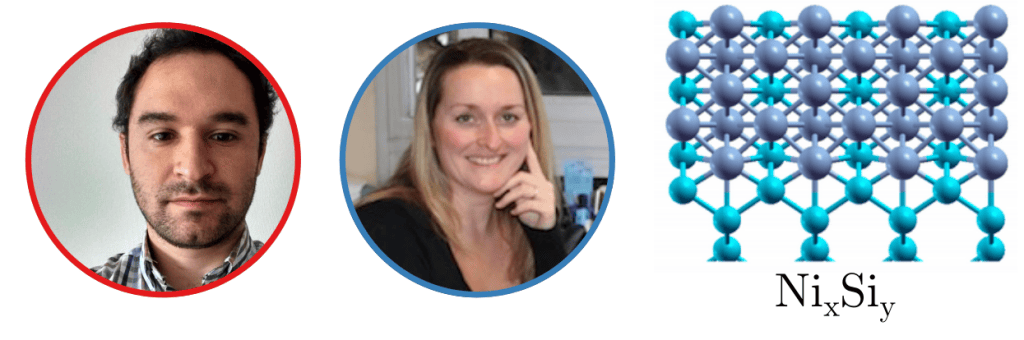
Very honored to officially welcome my first PhD student César Jara in co-suppervision with Anne Hemeryck (LAAS-CNRS). Since March 2020, César is studying the modelling of defects at the interface layers in silicides. Me, I am simply jumping on board to help with the development of machine-learning interaction potentials and the subsequent study of inherent phase-transitions.
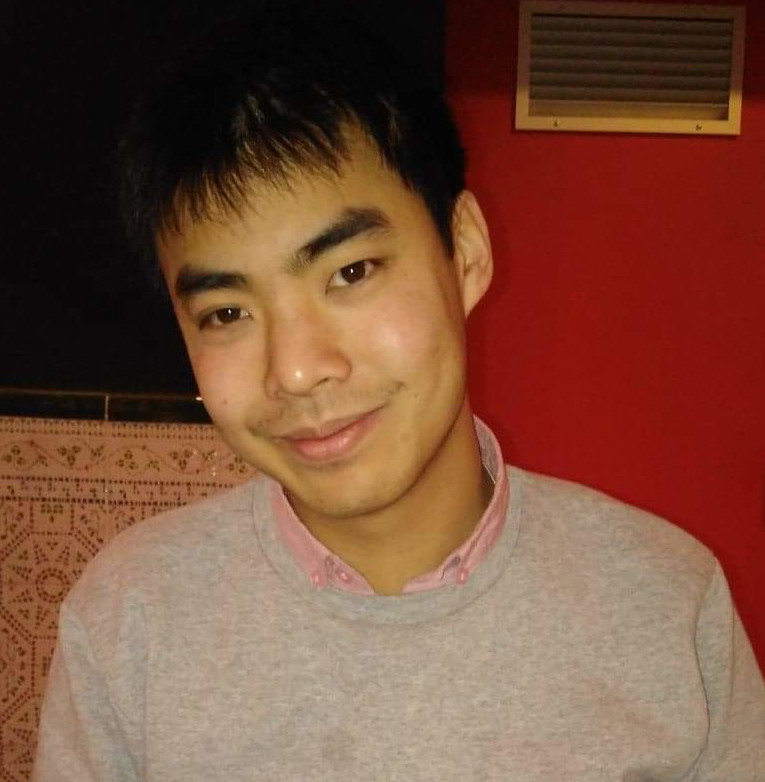
While Owen Fresse–Colson and Thomas Da Rocha are finishing their internship, I am glad to welcome a new L3 student: Alexis Raulin-Foissac. His work will focus a comparison between our own machine-learning method “Physical LassoLars Interaction Potential” (PLIP) and the more commonly employed “Artificial Neural Network Potentials”.